What Awaits Us at Madring
The new Madring circuit arrives with 19 red flags and broken chassis from Formula 3 testing already on record. Williams boss James Vowles calls it a car-breaker – here’s what that means for the race weekend.
Madring and the Red Flags
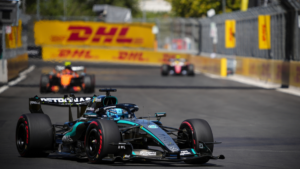
Madrid gets its Grand Prix back next weekend. The new, 5.416km Madring circuit is ready for 57 laps and a schedule that looks tidy on paper. The track itself, not so much. The FIA’s Formula 3 test produced 19 red flags over two days, 11 of them for contact with the barriers, plus a string of spins and stranded cars. Williams boss James Vowles looked at the same data and didn’t sugar-coat it. He called Madring a car-breaker. You don’t need to be a historian to know what that usually means on a semi-street circuit with fresh asphalt and almost no run-off. Just watch Baku 2016 or Jeddah 2021.
The uncomfortable question hangs over the weekend: is Madring ready – not as a venue with glossy fan zones and a metro stop at the entrance, but as a racetrack that can absorb mistakes without turning them into carbon splinters? Today’s answer is nuanced.
What the F3 Test Actually Told Us
Two days, 19 red flags, and a clear pattern. The tight chicane at Turns 5 and 6 triggered repeated incidents after the 800-metre straight that leads into heavy braking and a narrowed exit. Contact with the barriers was frequent at 5, 6, 7 and further round the lap, at 17 and 14. The F3 field also produced the spins and lock-ups you’d expect on a brand-new track with evolving grip, but the ratio of wall strikes to harmless mistakes was the dominant theme.
There was pace too. Hugh Ugochukwu went fastest with a 1:49.034 once the rubber had “opened up” the track. Drivers compared its character to Monaco and Macau. Audi’s Formula 1 junior Freddie Slater put it plainly.
“I think this track is incredible to drive, a bit old-school, with interesting corners and a lot of character. It’s one of the most enjoyable laps to push on the calendar… I can’t pick a favourite section, but I like the Turn 5-6 chicane.”
Freddie Slater
The enthusiasm is genuine. So is the damage bill.
Vowles’ Log, Written in Red
James Vowles looked past the pretty footage. His summary was clinical, and it has already made the rounds among technical teams up and down the paddock.
“We were surprised by the level of sustained G-forces in the banked corner, around four and a half seconds, and that’s going to be a challenge not just for the car but for the systems too. In the Formula 3 test there were 19 red flags, three broken chassis, and six broken suspensions. Sure, those are F3 drivers, but the track breaks cars. It’ll be interesting to see what happens.”
James Vowles
Translated into F1 reality: if F3 is breaking chassis and wishbones on that scale, F1 teams will go easy on the kerbs and run conservative suspension geometry while they map out the impact zones. That kills outright pace, but it buys survival. And it shapes the race itself.
The Two Corners That Will Write the Story
Turns 5/6
This chicane isn’t television decoration. You arrive fast, the approach tightens, and the exit barely forgives anything. Think of the profile of Turns 14-15 in Miami, but without the comfortable run-off. Expect yellow flags in the early practices, broken front wings, and early calls for barrier adjustments or added Tecpro if the sessions show it’s a repeat offender.
Turn 12, La Monumental
The star corner: a semi-circular right-hander that keeps an F1 car under lateral load for around 4.5 seconds. For comparison, the legendary Turn 8 in Istanbul held full load for around five seconds back in the V8 and early-hybrid era. Suzuka’s 130R is shorter in duration, Zandvoort is steeper but also shorter. Four and a half seconds is a long time to keep tyres, fluids and cooling within limits.
In practice, that simply means you’ll hear engineers talking about temperature deltas in this sector and cooling trade-offs for the power unit. Some teams will lift before the Monumental in practice, not to save fuel, but to protect systems while they gather data. Over long stints, small setup differences will affect tyre life there more than anywhere else on the lap.
Overtaking and the Shape of the Race
There’s one clearly marked overtaking zone: the exit of Turn 3 onto the long curve and the 800-metre straight into Turn 5. That’s the obvious DRS zone and the main chance for a late-braking move. If Turn 5 turns out to be too treacherous and drivers back off, secondary attempts will be rare. We might see moves at Turn 13 after the Monumental if the tyres hold up reasonably and the car ahead hesitates under braking. Otherwise, this will be a story of track position, undercuts, and safety-car roulette.
Even so, this is a semi-street circuit. First weekends at venues like this often produce bunched-up fields, long virtual-safety-car periods, and strategies punished by tight windows around late neutralisations. If you’re new to this – think back to Baku’s early years, and Jeddah 2021.
Is It Ready – Construction- and Politics-Wise
The calendar says yes. The asphalt is down, the walls are up, the metro drops you at the door, and the promoter is marketing the Monumental as a 45,000-seat grandstand around a banked, 24%-gradient concrete corner over 500 metres long. Ferrari were already filming there in July, F3 put heat cycles into the surface, and the official race weekend runs September 11-13 over 57 laps.
Finishing touches are still visible around the paddock and hospitality zones. Homologating a first hybrid street circuit is always a race against the clock. The international paddock has seen this before, and the tape usually comes off the last barrier the night before FP1. The more sensitive issue is the local reaction. Residents in Ortaleza and Valdebebas are protesting over noise and disruption to daily life and hinting at legal action. The organisers insist the measured levels are within the licence. Expect monitoring, headlines, and a heated dispute that will run on past the chequered flag.
Historical Parallels That Matter
New or reprofiled circuits usually bite early on, then settle down. Zandvoort’s return in 2021 raised questions but went off cleanly and became a solid fixture. Jeddah 2021 was chaos and tension, then changes tamed the worst blind spots. Miami 2022 had a surface that irritated drivers, then it got better. Valencia 2008 looked safe, then it sent the crowd to sleep and disappeared – not because of crashes, but because of boredom. Baku 2016 was a mess until the teams and the city learned its edges, then it became a modern classic.
Madring sits closer to Jeddah and Miami on that scale. It’s fast, it’s urban, and it’s unforgiving in places.
What to Watch Over the Weekend
Free practice will open with red flags. The smart teams will bank long stints early in FP2, before the grip plateau, because Sunday’s evolution will be strong and Saturday morning will be congested. Qualifying will reward cars that get through Turns 5 and 6 cleanly without clipping the floor edges. On Sunday, a safety car is likely. The undercut will be strong if you exit ahead of your rival on the out-lap for Turn 5. Expect to hear engineers talking about left-front tyre loading and how much time they’re willing to sacrifice before the Monumental to keep that tyre alive.
A Tight Risk Map
Below is a compact look at the sections that will decide the weekend.
- T5-6: Tight, heavy braking, close barrier on exit. Main risk: broken wings, scraped sidepods, red flags. What to watch: barrier adjustments or added Tecpro if the pattern repeats.
- T12 Monumental: 500m right-hander, ~4.5s of sustained loading. Main risk: tyre temperatures, bearings, cooling. What to watch: lifting off in practice, divergence over long stints.
- T14-17: Rhythm section after a high-speed run. Main risk: blocking from behind, the wall at T17. Main risk: safety car from single mistakes.
- Pit entry/exit: Street-circuit geometry, mixed sightlines. Main risk: unsafe-release risk under SC/VSC. What to watch: discipline in tight windows.
The Verdict, No PR
Madring will put on a show. It will punish both hesitation and poor discipline. If you like wide margins and gravel traps, this isn’t your track. If you like high stakes and thin white lines, you’ll love it here. The good news is that F3 has already stress-tested many of the weak points in lower-stakes conditions. The bad news is that the weak points are real.
Stefano Domenicali said it with the calm of a man who’s opened more than one new venue at the last minute.
“It’s not perfect, but there’s always room for improvement.”
Stefano Domenicali
Sounds like an understatement. In this business, it often is.