Mercedes at a Crossroads: Has George Russell Become the Number Two Behind Antonelli?
Six wins to two, a 66-point gap, and a split strategy at Monza that let Kimi Antonelli chase down and pass Russell from 19th on the grid – Mercedes still calls it an equal fight, but the on-track decisions are starting to say otherwise.
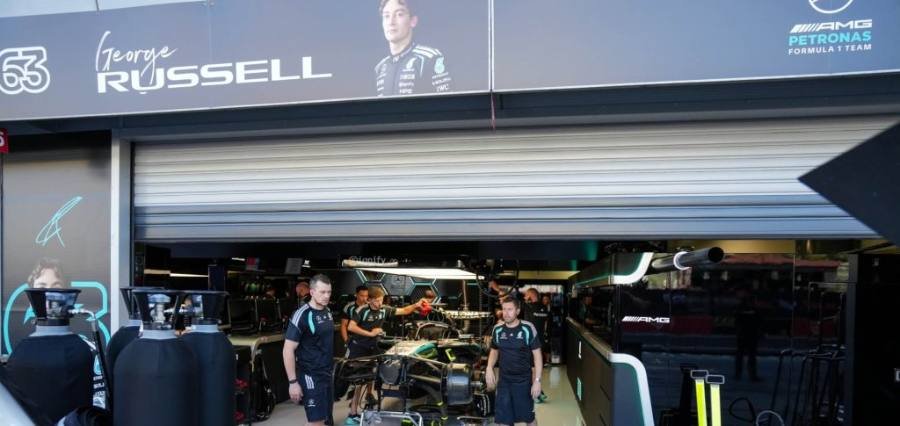
If you want to know what the pecking order at Mercedes looks like after Monza, don’t listen to the official statements. Just watch the last three laps.
George Russell was trying to nurse worn hard tyres to the finish. Kimi Antonelli was flying towards him on a fresh set of mediums, fitted during a perfectly timed virtual safety car. The Italian caught him, passed him, and won his home race after starting from just 19th.
The gap between the two is now 66 points with ten rounds left. Call it good strategy if you like. Or call it the moment the changing of the guard became visible to everyone.
The facts speak for themselves. Antonelli has six wins this season, Russell two. In the standings it’s 267 to 201. This is no longer a temporary dip in form – it’s a trend Mercedes can hardly ignore.
The Split Strategy Said Enough
Mercedes made the logical move for a team with two cars up front that can afford to cover more than one scenario.
Russell stayed out on the hard tyres and took the conservative route to the finish. Antonelli pitted under the virtual safety car, got new mediums, and a real chance to attack.
Toto Wolff admitted after the race that, according to the pre-race simulations, Kimi was expected to close in on his teammate but not catch him. Except Antonelli didn’t stick to the simulations. He caught him, passed him, and won.
Russell took it calmly:
“There was logic in splitting the strategies, but Kimi was very quick, and there’s the result.”
Mercedes didn’t sacrifice Russell. The team simply didn’t sacrifice Antonelli’s chance to win in order to protect George from an attack. And that’s exactly where the thin line between official equality and the real pecking order runs.
On paper, Mercedes still has two equal drivers. On track, we’re increasingly seeing a leader and his main challenger.
How Did It Get to This Point?
At the start of the season, the expectation was that Russell would be the team’s steady anchor while 19-year-old Antonelli built experience and made the inevitable rookie mistakes.
Almost the opposite happened.
Antonelli very quickly started driving with the confidence of a driver who doesn’t just have speed, but knows how to turn opportunities into results. Russell, meanwhile, has racked up a string of difficult weekends – technical issues, badly timed safety cars, a retirement from the lead in Montreal, penalties in Monaco, and a poor result in Budapest.
None of that, on its own, means George has become a slower driver. Added together, though, it adds up to a 66-point deficit.
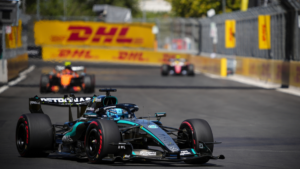
Monza showed the gap between the two in miniature. Antonelli sliced through traffic quickly and with almost no time lost. Russell drove in control and held the race in his hands for a long time, but by the end he had neither the tyres nor a strategic move left to respond with.
The overtake itself was clean. The message behind it – far more painful.
Toto Wolff described Antonelli’s performance like this:
“When the driver and the car become one, there’s nothing to stop them.”
That doesn’t sound like a comment about a talented rookie still learning the ropes. It sounds like a description of a driver a team is gradually starting to build itself around.
The Psychology After Monza
Russell carried himself with dignity on the podium, even as the whole of Monza was already celebrating the local boy’s fairytale. After the finish, he admitted he’s not thinking about the title right now, but about how to win the next race.
“Kimi is driving incredibly this season and deserves to be leading the championship. I just need to win more races.”
That’s an honest assessment. But it’s also an admission that the initiative is no longer in his hands.
When you’re chasing the title, you think about the whole picture. When you’re seriously behind, you start with the next race and hope a run of good results pulls the season back towards you. That’s exactly where Russell finds himself right now.
What Do the Numbers Say?
Six wins to two. A 66-point gap. Ten rounds to go.
To that we should add the likelihood of Russell taking an engine penalty before Abu Dhabi. Antonelli, for his part, just beat him at Monza after starting from 19th.
For Mercedes, the priorities are already clear. The team has to secure the constructors’ title, but it also can’t afford to let the driver with six wins and a commanding lead lose the championship because of an equal-treatment policy kept up for too long.
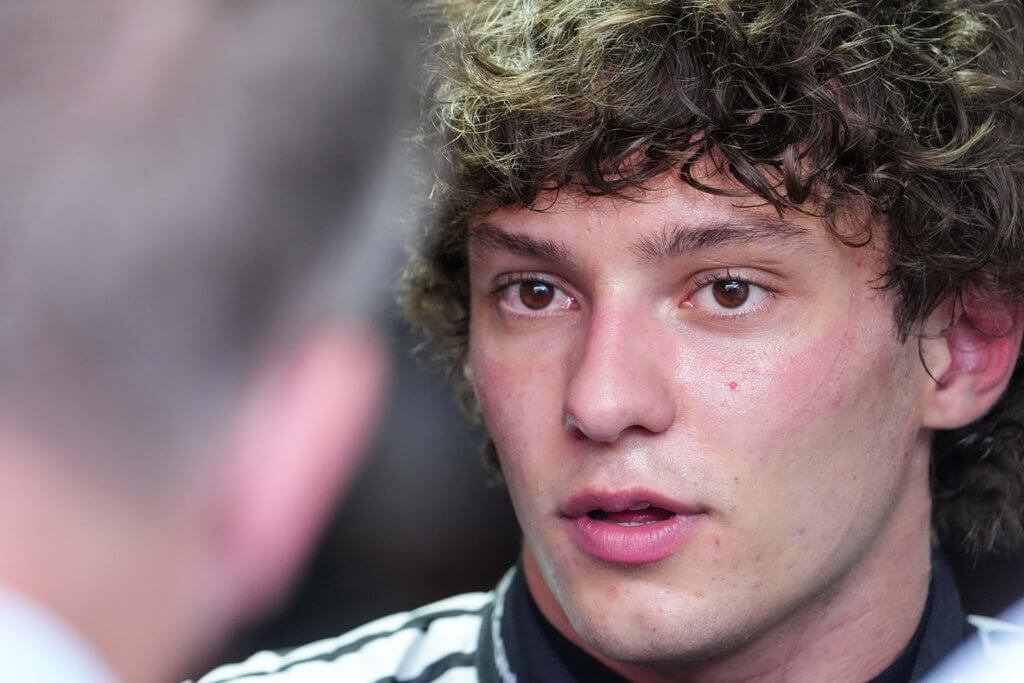
Kimi Antonelli during the Monza Grand Prix – source – © Copyright: LAP.bg
The Standings After Monza
| Position | Driver | Team | Points |
|---|---|---|---|
| 1 | Kimi Antonelli | Mercedes | 267 |
| 2 | George Russell | Mercedes | 201 |
| 3 | Lewis Hamilton | Ferrari | 191 |
| 4 | Lando Norris | McLaren | 171 |
| 5 | Charles Leclerc | Ferrari | 155 |
History Has Already Warned Teams About This
Formula 1 has shown time and again how dangerous it can be to put off a decision like this for too long.
McLaren let Ayrton Senna and Alain Prost race freely in 1988. The approach worked because the team’s advantage was so large that the internal battle couldn’t hand the title to an outside rival.
Williams wasn’t so lucky in 1986. Nigel Mansell and Nelson Piquet took points off each other, and the team never decided in time who it was backing. Alain Prost took advantage and won the title in the weaker McLaren.
Ferrari in the Michael Schumacher era chose the opposite extreme. The hierarchy was clear, the decisions sometimes looked brutal, but the results filled the trophy cabinet with titles.
Mercedes has its own painful experience too. The team kept Hamilton and Rosberg on equal terms until the relationship between them fully broke down. The collision in Spain in 2016 took both cars out of the race and showed the cost of an unrestrained internal war.
The situation in 2026 still doesn’t look like Ferrari in 2002. There are no open team orders, and no one is telling Russell to pull over. What we’re seeing instead is equality in words, and a gradual reshuffling of priorities in the actual racing decisions.
Is Russell Already Number Two?
Officially – no.
Mercedes hasn’t declared Antonelli its number one driver and hasn’t imposed any visible team orders. But roles in Formula 1 are rarely defined by an official statement.
They show up in the small decisions: who gets the more aggressive strategy, whose racing window gets protected, who stays out to take the risk, and who gets the better set of tyres.
At Monza, Antonelli got the strategy that gave him a shot at winning. Russell was left in the more exposed position. That wasn’t a punishment for George – it was the logical call in favour of the faster driver in that specific moment.
The problem for Russell is that these “specific moments” keep multiplying.
Is There Still a Way Back?
Yes. Ten races is more than enough to turn a championship around. One technical issue, one crash, or two bad weekends can quickly reshape the points picture.
Sebastian Vettel clawed back 42 points against Fernando Alonso in 2012. Lewis Hamilton has also overturned serious deficits against Nico Rosberg. Under the current points system, one failed race can wipe out a large chunk of a lead.
To get back into the fight, though, Russell needs to do more than just be solid. He needs to once again be the unquestionably faster Mercedes driver.
That means strong qualifying sessions, race control, and a run of clean weekends without mistakes. If an engine penalty is coming, the team needs to use it at a track where overtaking is possible and the damage can be limited.
Russell doesn’t need a miracle. He needs wins. And a bit of the luck that this season keeps stopping at the other side of the garage.
The Problem Named Antonelli
Russell’s biggest difficulty isn’t Mercedes’ strategy. It’s Antonelli himself.
The Italian no longer looks like just a very fast young driver. At Monza he showed patience in traffic, paced himself correctly, and timed his attack so that the strongest part of his chase arrived at exactly the right moment.
Those are the qualities of a driver who can win championships, not just races.
Mercedes will keep talking about equal treatment. And that’s normal – the team needs both its drivers to stay motivated, especially while the constructors’ title isn’t mathematically settled yet.
But the truth isn’t in the press releases. It’s in the pit-wall decisions.
And at Monza, that decision gave Antonelli the chance to attack. He did the rest himself.
The Verdict
George Russell hasn’t officially been declared Mercedes’ second driver. But after Monza, it’s hard to call him a fully equal contender any more.
Not because the team has demoted him, but because the results have gradually put him in that position. Antonelli has more wins, a big lead, and the momentum of a driver who right now looks ready to become world champion.
Russell can still turn the season around, but he has to do it on track. Not with words, not with arguments, and not by waiting for Mercedes to protect him from his own teammate.
At Monza, Antonelli started 19th, caught Russell, and beat him in front of his own home crowd. After a performance like that, you don’t argue with the pecking order.
You try to flip it.