VW Tiguan eHybrid: the family SUV that’s nearly an EV on weekdays
The third-generation Tiguan is slipperier and more high-tech, and its plug-in hybrid offers around 120 km of electric range plus 50 kW DC charging.
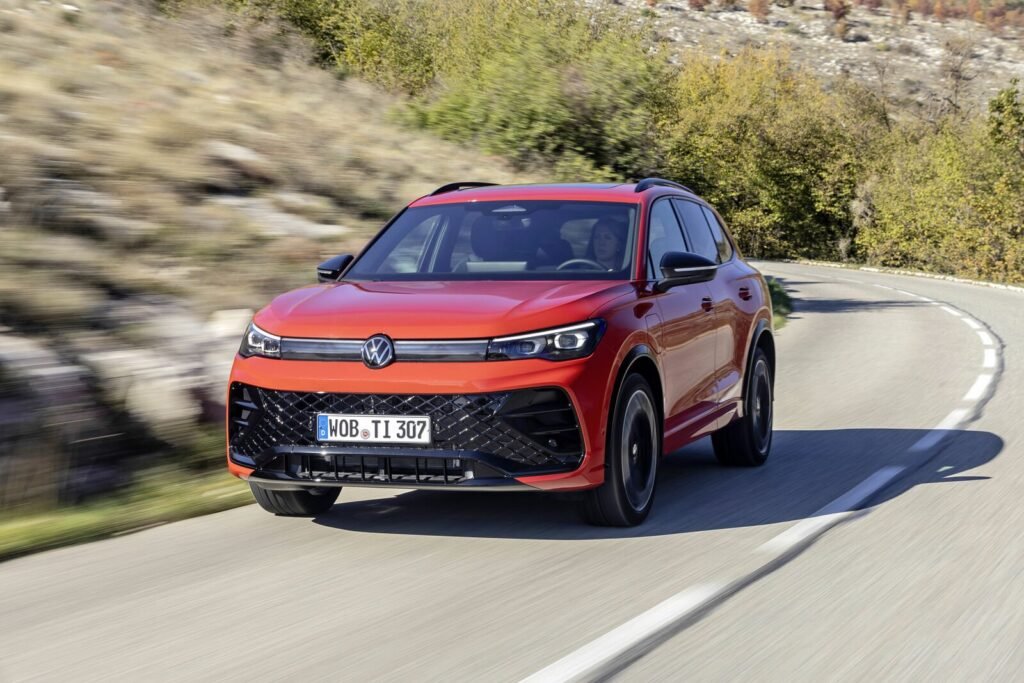
Снимка / Photo: Volkswagen (Volkswagen Newsroom)
With more than 7.6 million sold, the Tiguan is one of Volkswagen’s most successful current models. So the third generation can’t afford to gamble: it has to be more practical, more efficient and more high-tech without scaring off loyal buyers. The most interesting version on paper is the Tiguan eHybrid – a plug-in hybrid with around 120 km of electric range, making it close to an EV from Monday to Friday.
Smoother, bigger, slipperier
The new Tiguan is 4,539 mm long – 30 mm more than its predecessor – with a width of 1,842 mm and a 2,680 mm wheelbase. The softer shape isn’t just styling: the drag coefficient drops from 0.33 to 0.28, which directly benefits fuel consumption and electric range. Optional IQ.LIGHT HD matrix headlights pack 38,400 LED segments, and wheels go up to 20 inches. At launch in Germany the trim walk ran Tiguan, Life, Elegance and R-Line.
Inside, a 12.9-inch central screen (15 inches optional) takes centre stage, with a 10.25-inch digital cockpit ahead of the driver. Volkswagen has also added a new multifunction Driving Experience switch with an integrated OLED display – an admission that not everything belongs on a touchscreen. ErgoActive Plus seats offer pneumatic lumbar support and massage, and the DCC Pro adaptive suspension uses two-valve dampers, which the brand describes as a world first.
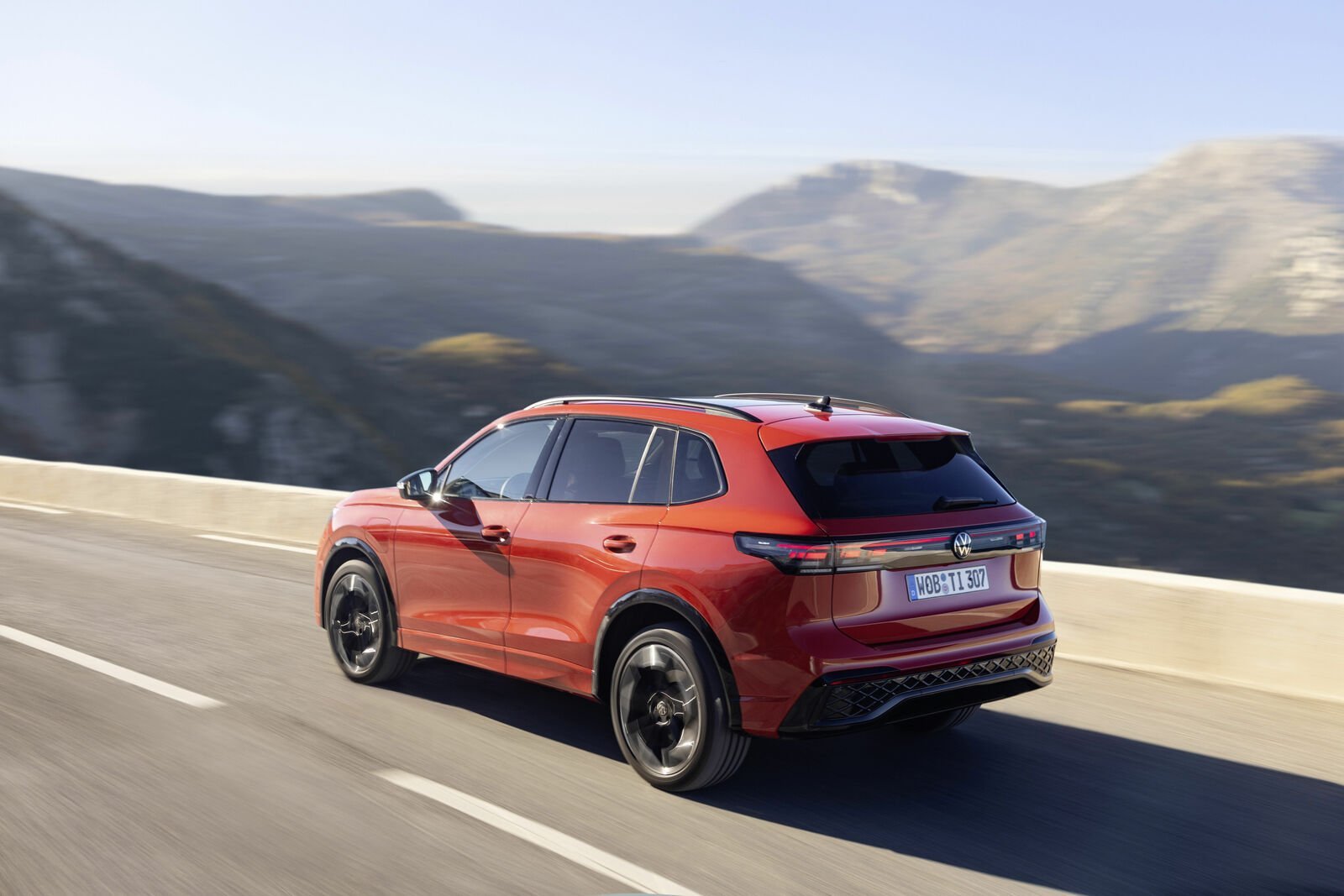
eHybrid and the rest of the range
The range opens with 1.5 eTSI mild hybrids at 96 kW (130 PS) and 110 kW (150 PS), followed by 2.0 TSI 4MOTION with 150 kW (204 PS) and 195 kW (265 PS), plus a 2.0 TDI with 110 kW (150 PS). Every version uses a DSG automatic gearbox.
The star, though, is the eHybrid, offered with 150 kW (204 PS) or 200 kW (272 PS) of system output. Its battery has a net capacity of 19.7 kWh, which Volkswagen says is good for up to around 120 km on electricity, with a total range of more than 900 km. It charges at up to 11 kW from a home wallbox and up to 50 kW at a DC fast charger – which turns a coffee stop into a genuinely useful top-up.
Practicality and price
The boot holds 652 litres in conventional versions and 490 litres in the eHybrid, which gives up space to the battery. Towing capacity ranges from 1,600 to 2,000 kg depending on the engine. German prices start at €36,600 for the 96 kW 1.5 eTSI, while the 150 kW Tiguan eHybrid costs from €48,655. In the UK, the range started from £34,075 OTR (April 2024).
Who is it for? If you mostly drive in town and can charge at home or work, the eHybrid is the logical pick – around 120 km of electric range covers many families’ weekly driving, while the petrol engine takes care of long holiday runs. Against the Toyota RAV4 and Škoda Kodiaq, the Tiguan leans on technology and breadth of choice, but the gap of almost €12,000 between the base car and the eHybrid means it pays to work out how much of your driving will really be electric.
Key specs – Volkswagen Tiguan (3rd generation)
- eHybrid: 150 kW (204 PS) or 200 kW (272 PS)
- Battery: 19.7 kWh net; EV range up to approx. 120 km; total range 900+ km
- Charging: up to 11 kW AC / up to 50 kW DC
- Other engines: 1.5 eTSI 96/110 kW, 2.0 TSI 4MOTION 150/195 kW, 2.0 TDI 110 kW
- Length/wheelbase: 4,539 / 2,680 mm; Cd 0.28
- Boot: 652 l (490 l eHybrid)
- Screens: 12.9 in (15 in optional) + 10.25 in digital cockpit
- Price (Germany): from €36,600; eHybrid from €48,655
Sources: Volkswagen Newsroom – the all-new Tiguan, Volkswagen Newsroom – Tiguan eHybrid, Volkswagen UK press pack.
Photos: Volkswagen (Volkswagen Newsroom)