A Horner Story: The Nightmare Wolff and Red Bull Can’t Wake Up From
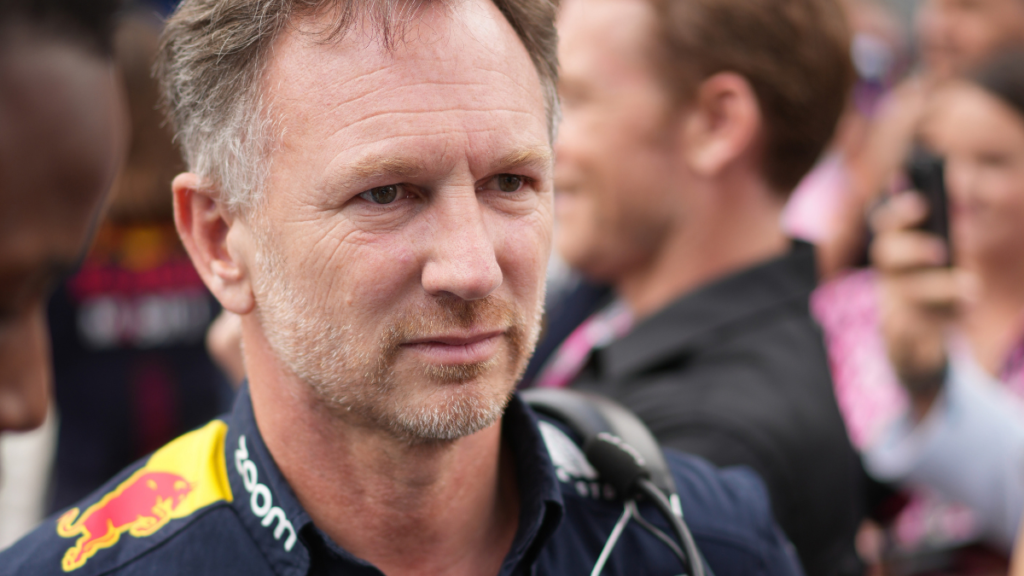
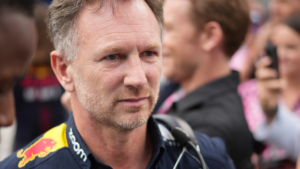
Christian Horner has called Ferrari “a dream” and opened the door to a Formula 1 return. There is no deal, but the mere mention of Maranello already feels like a midnight knock at the paddock door. The man who built Red Bull’s championship machine could return in red. To Ferrari, he could be a saviour. To his rivals, he could be an old nightmare refusing to stay buried.
Horner could write the biggest chapter of his career
Christian Horner spent 20 years in charge of Red Bull. The team entered Formula 1 in 2005 as a noisy newcomer and went on to win eight drivers’ titles and six constructors’ championships during his tenure. Horner no longer runs the team, but he has not hidden his willingness to return to F1. Ferrari is the only traditional team-principal role he has publicly described as tempting enough. That is an acknowledged interest, not a confirmed deal.
For Horner, the move could be the final great chapter of his career. If he takes Ferrari back to the top, he would prove that his success was not simply the product of Red Bull, Adrian Newey and Max Verstappen. If he fails, it would show that even the paddock’s strategic demon cannot exorcise Maranello’s ghosts alone.
Red Bull could be among the losers
Over two decades, Horner turned Red Bull from a newcomer into one of Formula 1’s most formidable winning machines. The first title-winning cycle came with Sebastian Vettel: from 2010 to 2013, Vettel won four consecutive drivers’ championships, while Red Bull claimed four constructors’ titles in a row. A new era followed with Max Verstappen, who became champion in 2021 and then won four consecutive titles from 2021 to 2024.
Horner’s return at a rival would be a nightmare twist for Red Bull. He did not merely watch the team win; he helped build the system that made those victories possible. He knows where decisions are made, how a championship organisation is assembled and how to turn disorder into an advantage. If he takes that experience to Ferrari, Red Bull would face its own past — this time dressed in red.
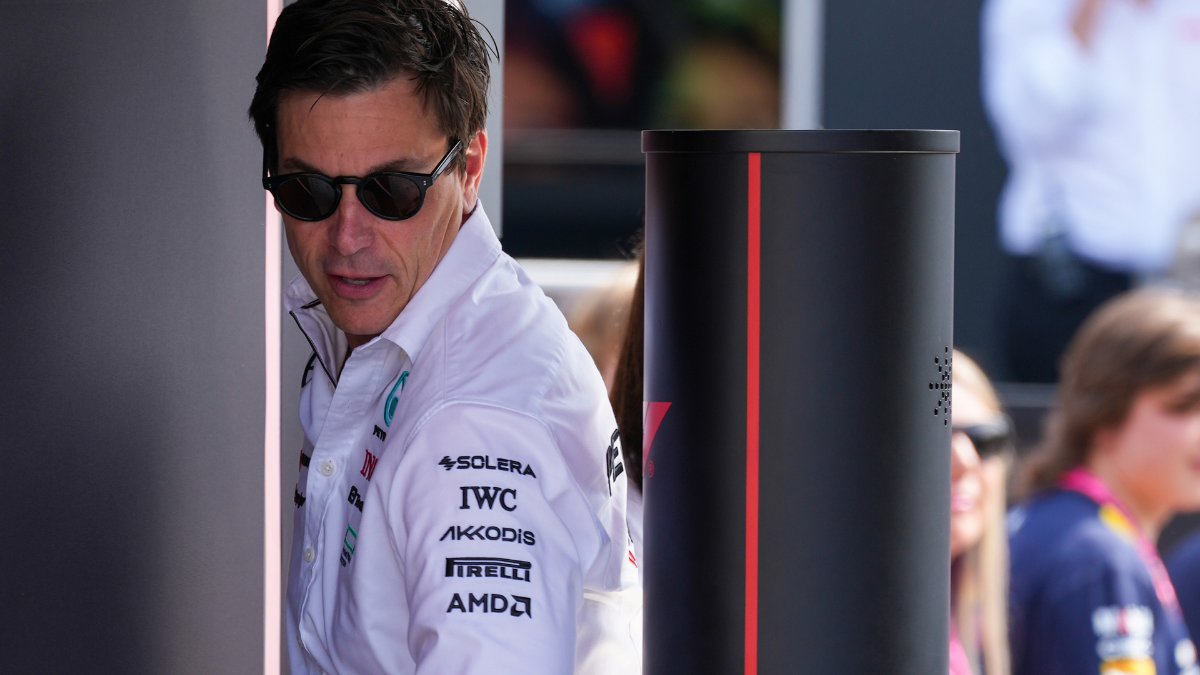
Why Toto Wolff does not want this nightmare to come true
For years, Toto Wolff and Horner were the most recognisable faces of the Mercedes–Red Bull rivalry. Their war was not confined to the track. It continued in front of the cameras, in press conferences and in arguments over the rules and stewards’ decisions.
If Horner returns with Ferrari, Wolff gets his old opponent in the most uncomfortable role possible: at the head of the team that most strongly embodies Formula 1’s history and ambition. The paddock’s grey eminence would once again be close to the centre of decision-making, armed with influence, experience and an unconventional mind that always seems to be searching for a move others have missed.
In battles over rules and stewards’ decisions, Horner often looked like a man who knew exactly which door to open — and which to leave shut while his rival pushed against it. If he arrives at Ferrari, the old psychological games could return as an echo from the paddock’s corridors.
Horner can bring influence and experience; he cannot guarantee a faster car. For Wolff to become the real loser, Ferrari would have to beat Mercedes in the championship or win a fight for drivers and key personnel. Still, the return of his old enemy would be enough to wake a tension many thought had been buried.
Ferrari after Jean Todt: five team principals, one unfinished job
Ferrari has won 16 constructors’ titles and 15 drivers’ championships. But its last constructors’ crown came in 2008, and its last drivers’ title in 2007. Since Jean Todt stepped down, five team principals have followed: Stefano Domenicali, Marco Mattiacci, Maurizio Arrivabene, Mattia Binotto and Fred Vasseur — each carrying the expectation of taking the team back to the top.
They represent five attempts to recover the formula Ferrari had under Todt: a strong technical core, stable leadership and clearly defined responsibilities. Under Todt, Ferrari won six drivers’ titles and seven constructors’ championships. It has not built the same sustained winning cycle since.
Ferrari has an enormous name, millions of fans, resources and engineering talent. But reputation does not win championships. The team can be the most loved in Formula 1 and still get strategy wrong, lose time through its organisation and fail to turn its drivers’ speed into titles. At least the pasta at Maranello is probably still good — but that does not save a carbonara once someone puts ketchup on it.
The problem is that every new team principal in Maranello seems to enter the same haunted house. They are expected to banish doubt, chaos and mistakes, but when results are slow to arrive, the old fears start whispering again. Ferrari needs more than a new name at the top. It needs a system that will not fall apart in the first storm — and a leader who can sting when the pressure is on.
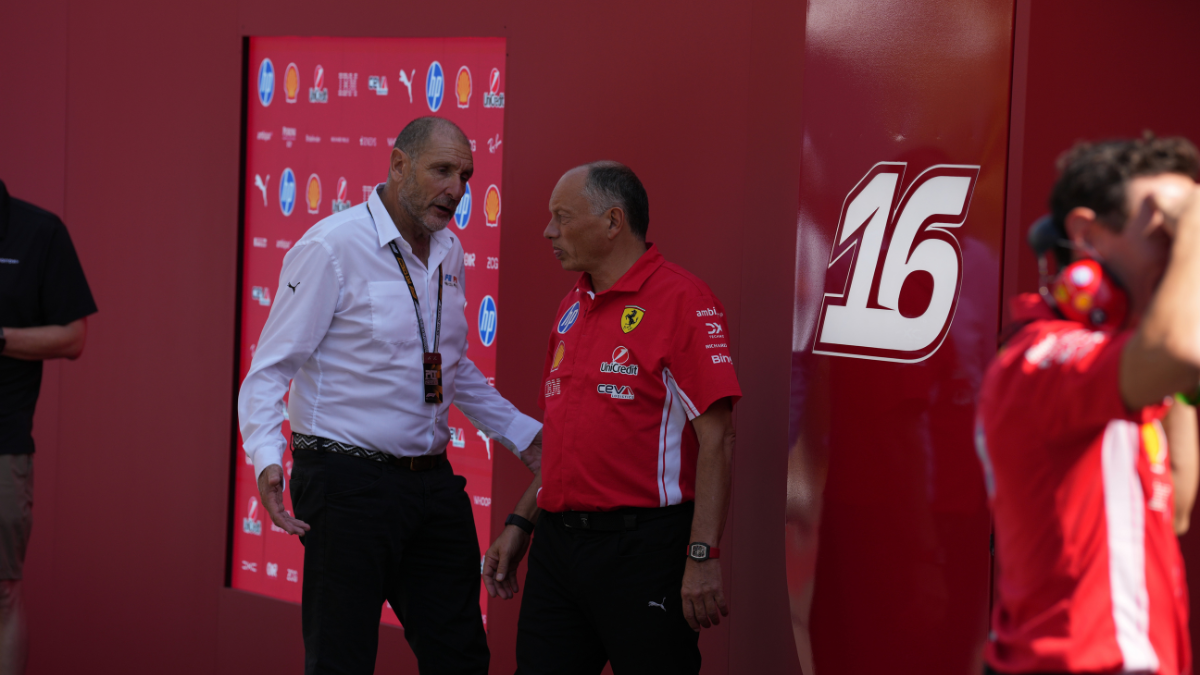
Vasseur and Ferrari’s unfinished championship model
Fred Vasseur was not simply an F2 team boss before Ferrari appointed him. He built a long career in junior categories and co-founded ART Grand Prix, a team that won titles in GP2 and GP3. He later worked at Renault, led Sauber/Alfa Romeo and took charge of Ferrari in 2023. Ferrari’s official biography lists his GP2 and GP3 successes, while Formula 1 describes ART as a team he co-founded with Nicolas Todt.
The issue is not necessarily that Vasseur lacks experience or understanding of the sport. Rather, Ferrari has yet to build the championship mentality in which every part of the team — from the drivers to the strategists — knows what to do when the stakes are highest.
In 2024, Ferrari fought for the constructors’ title until the final race. That showed the project could be competitive. But no title followed, and in 2026 Vasseur again came under pressure over the team’s performance and decisions. Ferrari publicly backed him, while Lewis Hamilton also supported him and suggested broader structural changes might be needed.
Criticism of Ferrari does not necessarily mean Vasseur is incapable. It reflects the feeling that the team is not turning potential into a lasting advantage quickly enough. Horner could offer a different approach, but if Ferrari expects him to fix everything alone, Maranello will repeat its old habit: changing the team principal when results fail to arrive.
2007: Ferrari’s last drivers’ title
In 2007, Ferrari won both championships, with Kimi Räikkönen taking the drivers’ crown. The title was dramatic: before the Brazilian finale, Räikkönen was behind Lewis Hamilton and Fernando Alonso. A strong race left him one point ahead of both rivals at the end of the season.
The championship is often remembered through McLaren’s drama: Hamilton and Alonso’s internal battle, the team’s punishment in the espionage scandal and the points it lost. But Ferrari still had to deliver on track. Räikkönen won the final two races and turned his rival’s chaos into a title.
It was Ferrari’s last major triumph under Jean Todt. The team then had a strong structure, experience and clear roles.
2008: Ferrari wins the teams’ title, but loses the drivers’ crown
A year later, Ferrari won the constructors’ championship again. The drivers’ title went to Hamilton, who beat Felipe Massa by one point after an extraordinary finale in Brazil.
Massa won in front of his home crowd and looked like world champion for a few dozen seconds. In the closing laps, Hamilton passed Timo Glock and recovered the position he needed for the title. Ferrari had been strong enough to win the constructors’ crown, but not to close out the drivers’ championship.
The season also lives on through arguments surrounding the investigation into the Singapore crash and tension inside Ferrari over Massa and team decisions. A year earlier, Ron Dennis had believed Hamilton could win the title in his debut season; the Brazilian finale delivered it by a single point. Glock, meanwhile, became part of one of the sport’s most unforgettable finishes.
Since then, Ferrari has won races and had title contenders of the highest calibre — Fernando Alonso, Sebastian Vettel, Charles Leclerc and Hamilton — but no new championship. Every new project starts under a heavy shadow: the team must end nearly two decades of waiting while past disappointments loom over it.
Could Hamilton lose his seat?
There is no confirmed information that Horner’s arrival would put Hamilton’s Ferrari seat at risk. It would make little sense for Horner to remove a seven-time world champion without a serious sporting reason, even if the Briton is in the later stage of his career. Ferrari has invested in the Hamilton project, and Hamilton has publicly backed Vasseur while calling for wider structural improvements.
Horner would also be expected to work with Ferrari’s existing line-up. Starting his tenure with a war against one of the sport’s biggest stars would create more noise than value. His job would be to improve Ferrari’s chances of winning, not to open new fronts before the season begins.
That does not mean Hamilton’s seat is guaranteed under every circumstance. In Formula 1, everything depends on results, contracts and a team’s long-term plan. If Ferrari decides it needs a different balance or a driver from the next generation, that discussion could begin independently of Horner. For now, it is speculation, not a confirmed scenario.
Horner could attract almost anyone to his project — with one obvious exception: Max Verstappen. That could leave Max in a delicate position, since a future move might point towards Mercedes or McLaren. For now, that too remains speculation.
Would Horner be the right move for Ferrari?
Appointing Horner could be the right move — if Ferrari knows why it wants him. Not for the big name, the headlines or another declaration of a “new era”. His value would lie in his experience building a championship team, bringing strong people together and carrying weight in the paddock.
Horner could be the strategic genius arranging the pieces while everyone else is still looking at the board. He could be the grey eminence moving decisions behind the scenes, or the demon from Red Bull’s past now appearing in red. He could also become another person from whom Ferrari expects the impossible.
Ferrari does not need another magical name at the top. It needs a system that will work after Horner, Vasseur or whoever comes next. If Maranello again decides that one person must cure the team’s “atrial fibrillation” — its strategy, engineering workflow, decision-making and culture — the story will end as it has before.
Horner could be a catalyst for Ferrari, or another noisy appointment burdened with impossible expectations. For Toto Wolff, his return would be an unwelcome reminder: the old rival is close again. And nobody knows whether he is coming to negotiate — or to open the door to the nightmare the paddock thought it had left behind.