“We make stars, we don’t buy them”: will Red Bull remember Mateschitz’s creed?
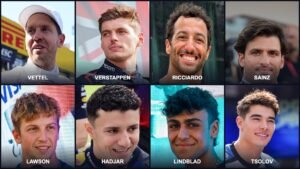
Racing Bulls has two 2027 seats and three candidates – Lawson, Lindblad and Nikola Tsolov. The choice will show whether the empire that made Vettel and Verstappen still remembers why it exists.
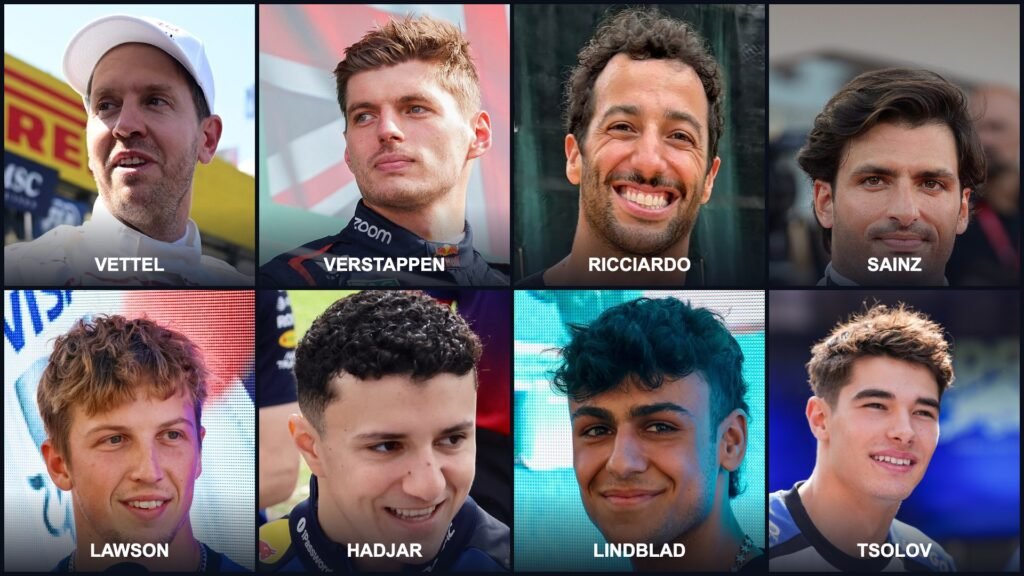 Photos: Andrea Diodato (CC BY 4.0), Steffen Prößdorf, DaHuzyBru, LucaFazPhoto, Yu Chu Chin (CC BY-SA 4.0) / Wikimedia Commons; Nikola Tsolov: PitLane24 archive. Collage: PitLane24.
Some doors only open once. In September 2005, Dietrich Mateschitz bought the tiny Italian Minardi team and announced it would become Red Bull’s “rookie team”. Twenty-one years later the same door is creaking again: Racing Bulls has two seats for 2027 and three candidates – Liam Lawson, Arvid Lindblad and Nikola Tsolov. It looks like a routine personnel call. In reality it is a memory test – whether the empire still remembers why it was built.
The door Mateschitz left open
When he explained the Minardi purchase, Mateschitz kept it simple. “As a sponsor, we tend to concentrate on supporting young drivers,” he told grandprix.com on 13 September 2005, adding that the new team’s name would reflect that it was “positioned as Red Bull’s rookie team”. That team became Scuderia Toro Rosso, then AlphaTauri, RB and today Racing Bulls. Its long-time boss Franz Tost would later call it a “rookie training school”.
Helmut Marko, the programme’s long-serving gatekeeper, spent years repeating a line he credits to the founder: “We don’t buy stars, we make stars.” Mateschitz died on 22 October 2022. Marko left Red Bull at the end of 2025. In late October 2026, speaking as a former adviser, he dusted off the same phrase – and said the Lawson-versus-Tsolov call “should actually go in Tsolov’s favour”.
Fairness matters here. Red Bull has not abandoned the creed. All four of its 2026 race drivers – Max Verstappen, Isack Hadjar, Liam Lawson and Arvid Lindblad – came through the junior system. But a door does not stay open by itself. Someone has to hold it.
2008: Monza, the rain and a 21-year-old
Monza, 14 September 2008. Rain falls before the start and the race begins behind the Safety Car. Sebastian Vettel, aged 21 years and 73 days, starts from pole in a Toro Rosso – a team that had been Minardi until recently and ran customer Ferrari power. He wins by 12.5 seconds from Heikki Kovalainen’s McLaren. It is Toro Rosso’s first victory, the first for an Italian team other than Ferrari since 1957, and Vettel becomes the youngest winner and youngest polesitter the sport had seen to that point.
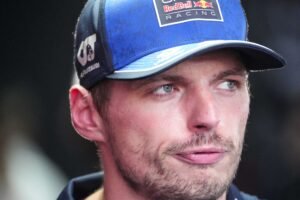
Red Bull could have filed it under “lucky in the wet”. Instead it promoted him. In 2009 Vettel replaced David Coulthard at Red Bull Racing and finished runner-up. Then came four straight titles – 2010, 2011, 2012 and 2013. In 2010 he became the youngest champion in history, a record that stood until just a few days ago. That Sunday at Monza was not a miracle. It was proof of concept: give a young driver a car and some faith, and the system works.
The champion factory, by the numbers
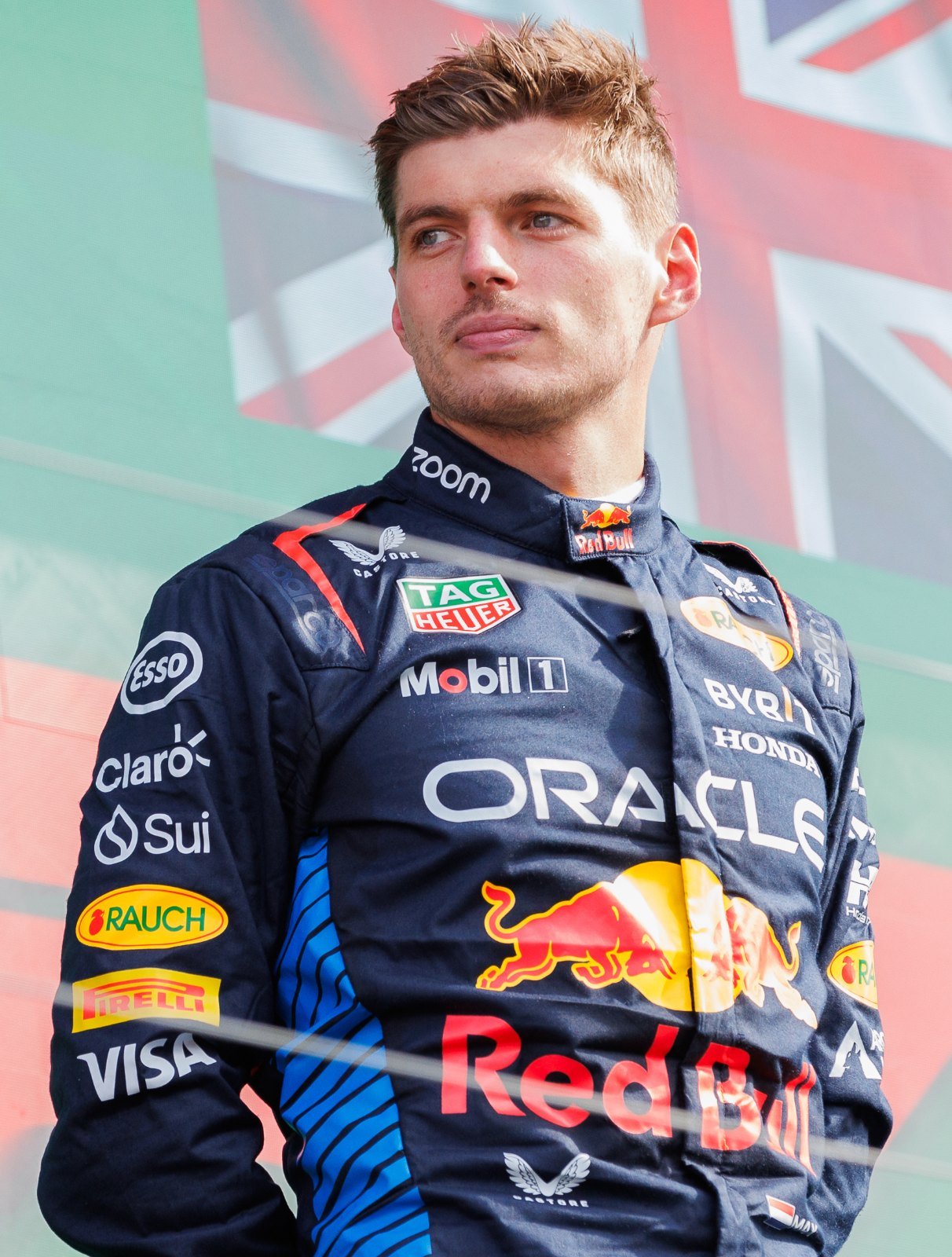
The numbers hit harder than any nostalgia. Red Bull Racing has eight Drivers’ titles, and all eight were won by graduates of its own programme – four for Vettel, four for Verstappen. The drivers it signed ready-made from elsewhere – David Coulthard (2005–2008), Mark Webber (2007–2013) and Sergio Pérez (2021–2024) – brought none. Webber won nine races and Pérez five, but the crowns went to the home-grown.
A partial roll call of those Red Bull opened the door for:
- Sebastian Vettel – Monza 2008 winner with Toro Rosso, four titles, 53 career wins.
- Max Verstappen – youngest driver ever to start an F1 race (17 years, 166 days, Australia 2015), winner on his Red Bull debut (Spain 2016, aged 18), four titles from 2021 to 2024.
- Daniel Ricciardo – eight wins, seven of them with Red Bull, twice third in the championship.
- Carlos Sainz – started at Toro Rosso, later won four races for Ferrari.
- Pierre Gasly – won at Monza in 2020 with AlphaTauri, only the second victory in the junior team’s history.
- Daniil Kvyat – three podiums, including third for Toro Rosso in Germany 2019.
- Alexander Albon – two Red Bull podiums in 2020, the first for a Thai driver.
- Jaime Alguersuari – the youngest F1 driver ever at his 2009 debut.
- Sébastien Buemi and Jean-Éric Vergne – both went on to become Formula E champions.
- Isack Hadjar – a rookie podium at Zandvoort in 2025, third in Baku in 2026, now at Red Bull with a 2027 contract.
- Arvid Lindblad – eighth on his Melbourne debut in 2026, the third-youngest points scorer in history behind Verstappen and Antonelli.
Not all of them became champions. But almost all of them got a real chance – and that is the whole point of the model.
Antonelli: the Toto Wolff lesson
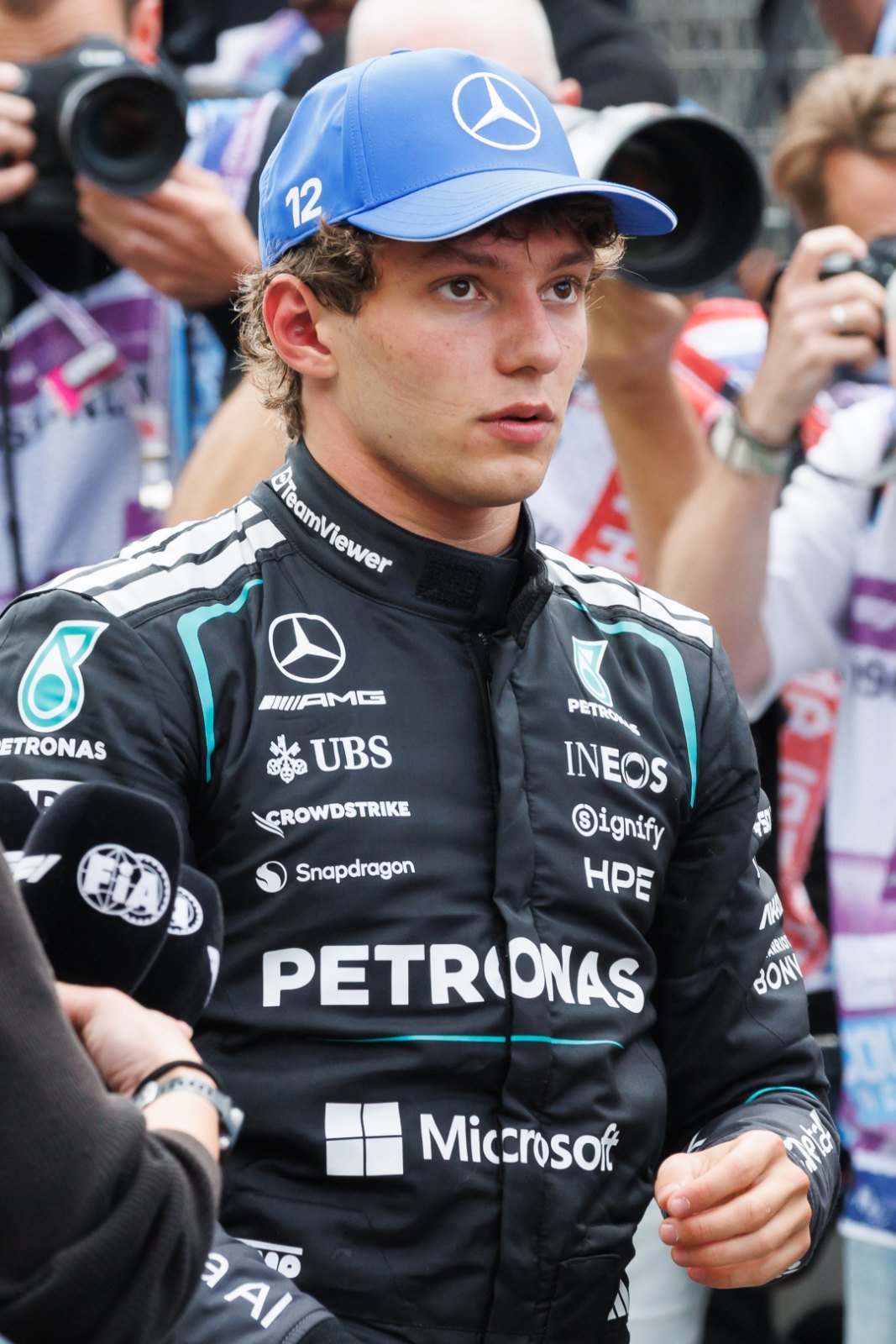
If anyone has read the Mateschitz recipe better than Red Bull itself in recent years, it is Toto Wolff. On 31 August 2024, Mercedes announced that 18-year-old Andrea Kimi Antonelli would replace seven-time champion Lewis Hamilton. It looked like a gamble, and Wolff later admitted it cost the team two backers: “We had two sponsors leaving us because of that.”
The payoff came on 1 November 2026 in Mexico City, where Antonelli clinched the title at 20 years and 68 days – the youngest champion ever, with four races still to run. Nine wins this season, including Monza from 19th on the grid. Italy’s first world champion since Alberto Ascari in 1953.
Wolff called it “a project over at least two years” and said there was “never even the slightest doubt”. That is precisely the philosophy Red Bull invented – only this time somebody else executed it.
Ferrari: horses in blinkers
Italy celebrated – and growled at the same time. La Gazzetta dello Sport’s front page on 2 November, as translated by Crash.net, said Antonelli was champion “thanks to his talent, the car and the fact that he isn’t racing for Ferrari”. Corriere dello Sport went further after Hamilton and Leclerc collided on the opening lap in Mexico, with a headline declaring that team principal Fred Vasseur “is guilty too”. Vasseur himself spoke of “a lack of respect for the brand”.
Salt in the wound: Antonelli’s father says former Ferrari boss Maurizio Arrivabene passed on signing Kimi as a junior. Meanwhile Maranello’s own academy graduates wait outside a locked door. Oliver Bearman remains at Haas and admitted in July: “I don’t want to be sitting around for three, four, five years waiting for a seat.” Rafael Câmara, an academy member since 2021, is heading to Haas too – not Ferrari.
Maranello’s horses run in blinkers, seeing only the stretch of track straight ahead. The danger for Red Bull is putting on the same blinkers – watching the next points haul instead of the next champion.
Câmara: Komatsu’s pragmatism
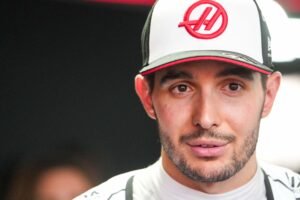
Ayao Komatsu went the other way. On 15 October Haas confirmed that 21-year-old Brazilian Rafael Câmara – Formula Regional Europe and Formula 3 champion, and Formula 2 leader on 207 points – had signed a multi-year deal from 2027, replacing Esteban Ocon. On 3 November the team went further: Ocon will not race again in 2026, and Câmara makes his debut at the São Paulo Grand Prix on 6–8 November, in front of his home crowd.
“We see huge potential in Rafa… He’s somebody with whom we can grow together,” Komatsu explained. Asked whether Haas is Ferrari’s B-team, he was blunt: drivers are chosen “completely, by myself and Mr Gene Haas”. The logic is simple – a small team, two young drivers in Bearman and Câmara, and a future that is built rather than rented.
The new generation is already inside
The new generation is no longer knocking politely – it has walked in. The champion is 20. Gabriel Bortoleto, 22, is ahead of 39-year-old team-mate Nico Hülkenberg in the standings. Bearman has a fifth place in China. Franco Colapinto has a new Alpine deal for 2027. Lindblad is 11th on 38 points, ahead of almost the entire midfield. Hadjar is eighth.
Behind them, Formula 2 is producing one of its tightest title fights in years: Câmara 207, Tsolov 200, Alexander Dunne 189 – with two rounds left, in Lusail (27–29 November) and Abu Dhabi (4–6 December).
The boy at the door of the big sport: Nikola Tsolov
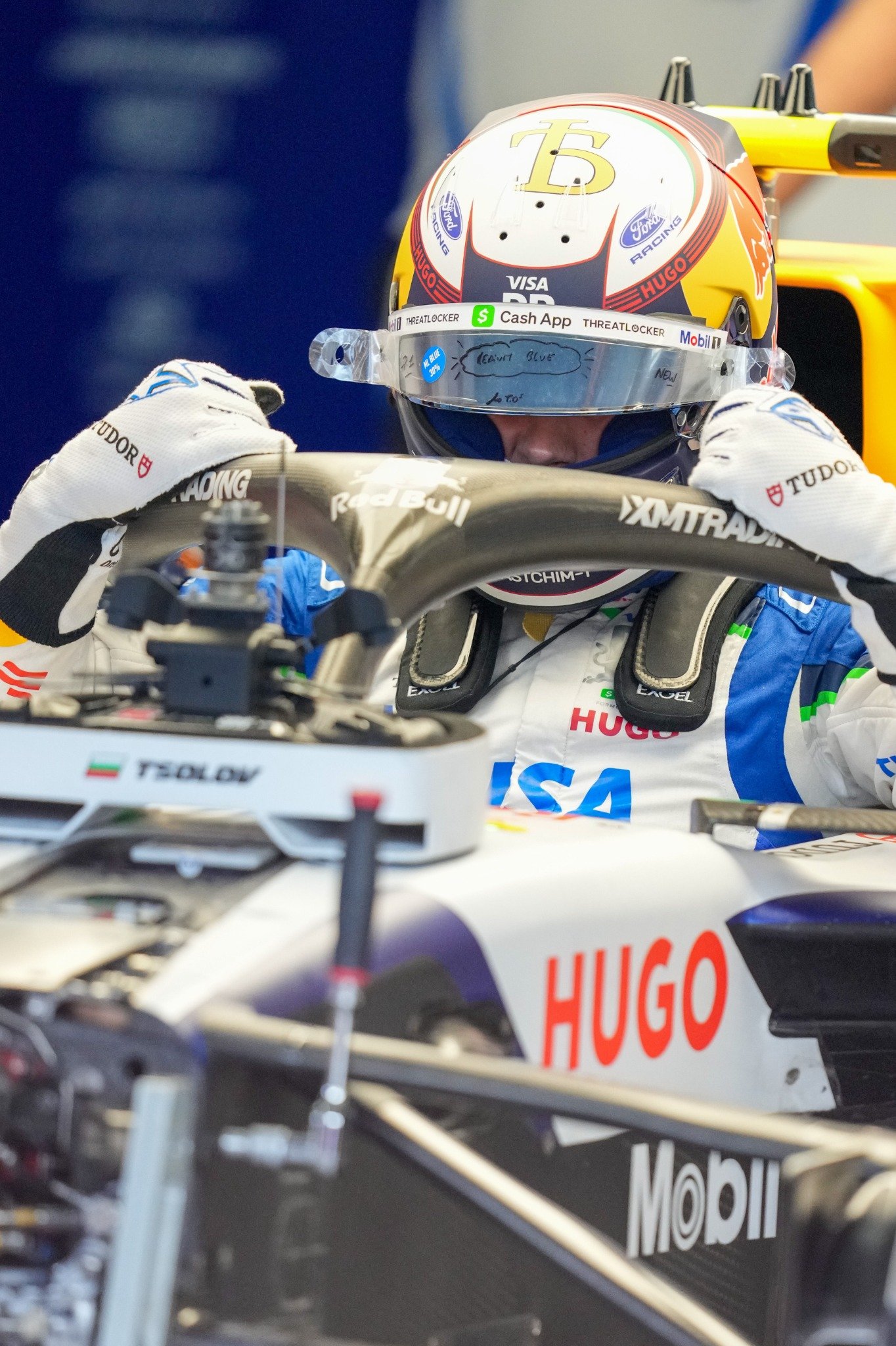
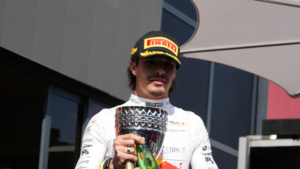
Nikola Tsolov was born in Sofia on 21 December 2006. He left the Alpine academy at the end of 2024 and has been a Red Bull junior since 2025. In 2026 he races for Campos in Formula 2 and has six wins – Feature Races in Melbourne, Monaco, Austria and Silverstone, plus Sprints in Miami and Silverstone.
In August he logged 690 km in a Racing Bulls car at Imola. On 30 October in Mexico came his first official F1 session – FP1 in Lawson’s car, 12th fastest, just 0.126s off Lindblad. “I think I was ready for it… I can do a lot better,” he said afterwards.
Racing Bulls boss Alan Permane called him “next in line” back in July, before immediately adding: “When that will happen, honestly, I don’t know.” There is also a paperwork hurdle: the superlicence. In August Tsolov had 25 of the 40 points required. Under FIA rules, the top three in Formula 2 each receive 40 points – so a top-three finish would unlock the door.
If we want an image, Tsolov is the boy standing on the threshold of the big sport with the key in his hand. All that is missing is someone inside pressing the handle.
Alan Permane’s fears
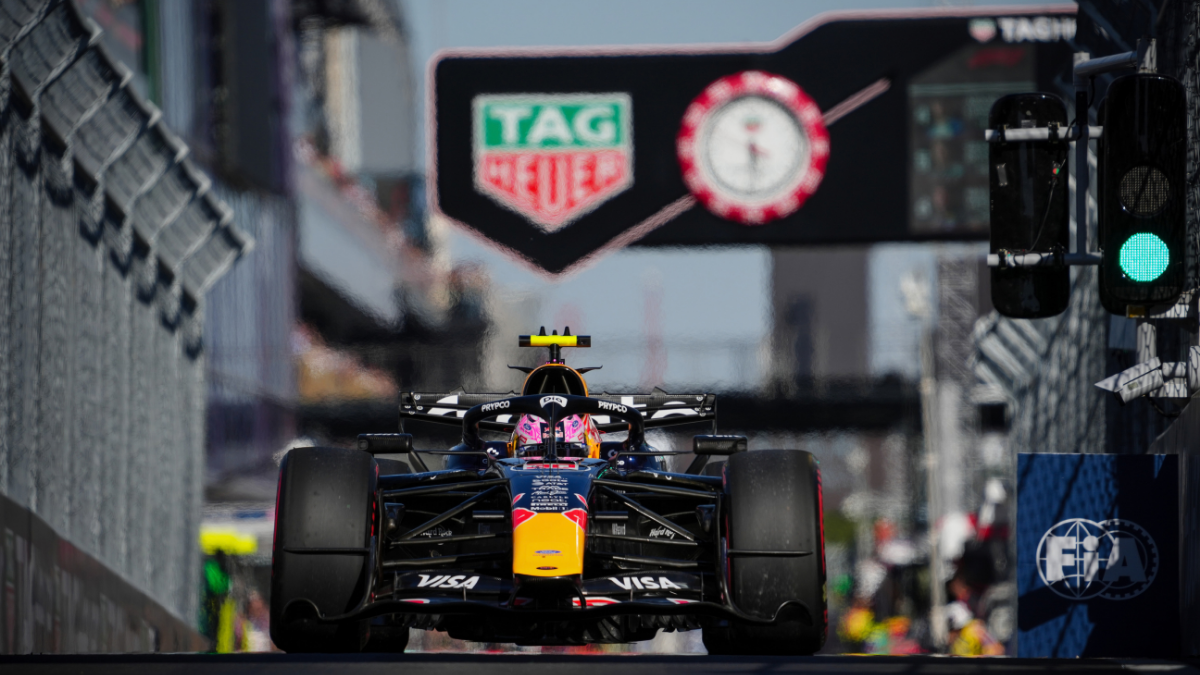
Permane’s position is not easy, and it would be unfair to flatten it. Racing Bulls sits fifth in the constructors’ standings on around 104 points, comfortably clear of Alpine. In modern F1 every place in that table carries real money from the revenue share. An experienced driver like Lawson is insurance: he brings points now.
Permane admits the dilemma himself: “three doesn’t fit into two, of course.” He says the team wants “to bring on young drivers, we want to bring on young talent”, yet also that it is “not in a rush”, with a decision due “in the coming weeks”. According to Crash.net, the final say rests with shareholders Chalerm Yoovidhya and Mark Mateschitz and CEO Oliver Mintzlaff.
Here lies the real risk. Fox Sports Australia reported, via GiveMeSport, “murmurs” that Red Bull is weighing a “fundamental change” – letting Racing Bulls keep drivers longer for “great stability” rather than rotating them. That remains a rumour, not a decision. But if it happens, the “rookie training school” becomes something else: a team defending a championship position rather than building a future. Fear of losing fifth place could prove stronger than the dream of the next Vettel.
Mekies and the smart play
Laurent Mekies, the Red Bull Racing team principal, has already shown what a brave call looks like. Hadjar was promoted to the senior team for 2026 and handed a 2027 extension in September. “We’re very excited to continue our journey with Isack… this extension is a testament to how much we believe in him,” Mekies said.
It is a smart play: in a team where Gasly and Lawson were sent back down and Albon lost his seat after short spells alongside Verstappen, Mekies picked the youngster and protected him. The question is whether the same logic will be applied one floor below – where, by design, the next Hadjar is supposed to be born.
How long will we keep seeing the same faces?
Look at the grid. Fernando Alonso is 45, a double champion (2005 and 2006), the record holder with 440 starts – and extended with Aston Martin into 2027. “I will retire from F1… but not yet,” he says. This season he has 7 points and sits 17th. Nico Hülkenberg is 39 and confirmed at Audi for 2027 – on 13 points, behind 22-year-old Bortoleto. Sergio Pérez is 36 and contracted to Cadillac until at least 2029. Valtteri Bottas is 37. Neither has scored a point for the new team in 2026 – the car is new and slow, but the seats are spoken for years ahead.
Honesty demands a caveat: Lewis Hamilton, at 41, is third in the championship with a win in Barcelona and seven podiums. Age alone is no verdict. The problem is different – when seats go to names, experience or commercial value rather than speed, the door for young drivers narrows.
Haven’t they made enough money? Counting other people’s salaries is not our business. But it is fair to ask whether a sport that loves talking about “the next generation” is giving that generation enough seats.
The old dogs’ fear
The old dogs’ fear is understandable: every young driver who climbs into a car is a mirror. Antonelli at Mercedes, Bortoleto at Audi and Bearman at Haas have shown that experience is no longer a guarantee. The teams’ fear is different – that a youngster will make mistakes, break a car, drop points. Yet Red Bull’s own history is the strongest argument against that fear: Verstappen was 17 when he arrived and 18 when he won.
Who is the next Verstappen?
Ask who the next Verstappen is and the answer is already written in the record books with the youngest title in history – Kimi Antonelli. The irony: he is a product of Mercedes’ courage, not Red Bull’s. The next one could be Câmara, Lindblad or Hadjar. It could also be the young man from Sofia who is currently seven points off the Formula 2 title.
The only certainty is that none of them becomes “the next Verstappen” if nobody lets them into the car.
Will Red Bull remember who it is?
Red Bull built a legend on one simple idea – that stars are made, not bought. Eight titles prove the idea works. Now Racing Bulls must decide whether it remains the school that produced Vettel and Verstappen, or becomes just another team guarding its seats like stock on a warehouse shelf.
The door Mateschitz opened twenty-one years ago – the one Vettel walked through at Monza – is still there. Three young men are waiting outside it. And nobody knows whether anyone inside still remembers why it was put there in the first place.
Sources: Dietrich Mateschitz interview, grandprix.com (2005); GPblog; Crash.net; Formula1.com; Crash.net (Italian press); Formula1.com (Komatsu); Formula1.com (Mexico FP1); Grande Prêmio; GiveMeSport.
Photos: Andrea Diodato (CC BY 4.0), Steffen Prößdorf, DaHuzyBru, LucaFazPhoto, Yu Chu Chin (CC BY-SA 4.0) / Wikimedia Commons; Nikola Tsolov: PitLane24 archive. Collage: PitLane24.