
V8 engines back in Formula 1: agreement in principle reached for 2030
Formula 1 has reached an agreement in principle on V8 engines for 2030, with a 2.1-litre turbocharged engine, reduced hybrid power and lighter cars planned.
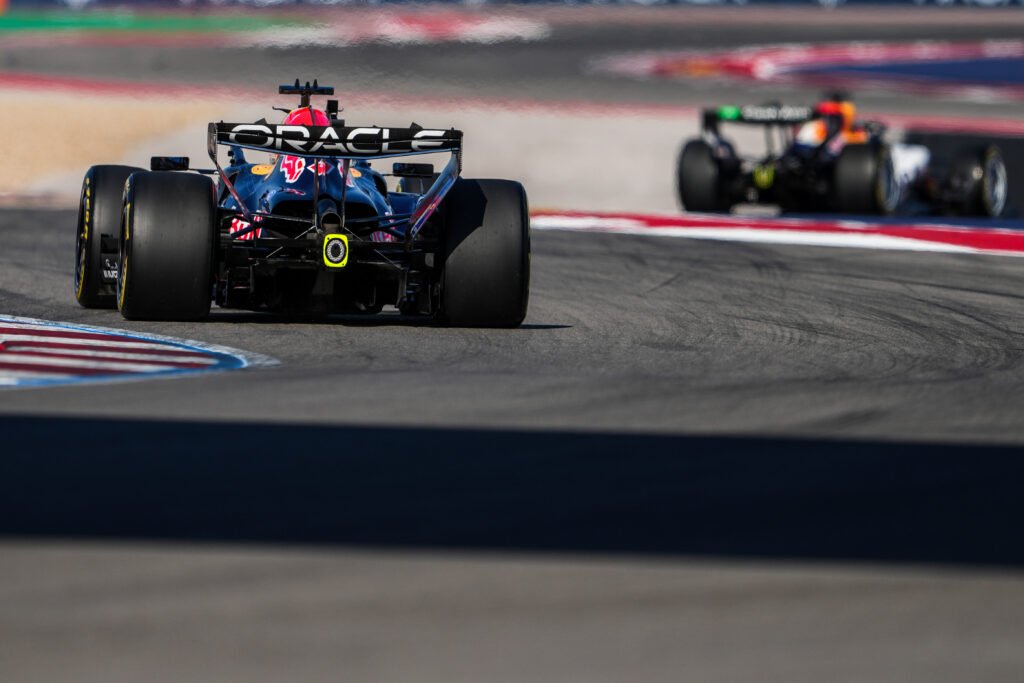 Max Verstappen #3 – Red Bull Racing – Netherlands Free practice sessions at the Formula 1 United States Grand Prix at the Circuit of The Americas in Austin, Texas, USA, on October 23, 2026. © 2026 Lubomir Asenov / LAP.bg. All rights reserved.
Formula 1 has taken a major step towards the return of V8 engines. The FIA, Formula One Management and power unit manufacturers have reached an agreement in principle on a new technical framework, targeting its introduction in 2030. The direction is clear: simpler engines, lighter cars and a greater emphasis on driver skill.
The agreement does not yet constitute a fully approved set of regulations, but it brings one of the most widely discussed changes to the championship’s future closer to reality.
A 2.1-litre turbocharged V8 and sustainable fuels
At the heart of the project is a 2.1-litre turbocharged V8, intended to replace the current 1.6-litre V6 configuration. The plan includes sustainable fuels and retains hybrid technology, although with a significantly smaller role.
According to The Race, choosing this capacity would allow manufacturers to draw on some of the expertise gained with their existing engines. Development would therefore not have to start entirely from scratch, an important consideration in controlling costs.
Less reliance on electrical power
The new concept would give the internal combustion engine a greater share of the total power output once again. This would represent a substantial shift from the 2026 regulations, which significantly increased the electrical contribution and made energy management a crucial part of performance.
The precise specifications of the future hybrid system have yet to be finalised. For now, the direction is towards reduced complexity and less dependence on electrical energy.
Lighter cars and a greater role for the driver
The changes also extend to the chassis. The ambition is for the next generation of cars to be lighter and more agile, giving drivers greater opportunities to use their skills in wheel-to-wheel competition.
“Our vision is clear, lighter, simpler and more affordable cars that put driver skill at the heart of the competition,” FIA president Mohammed Ben Sulayem said, as quoted by GPblog.
He also links the return of V8 engines to restoring some of the sound and emotion that fans associate with Formula 1.
The decisive next step comes in December
According to Grande Prêmio, the definitive proposal is due to be presented to the FIA World Motor Sport Council in Shanghai in December.
If the change is approved for 2030, the current technical cycle will end after the 2029 season. That would give the generation of power units introduced in 2026 just four seasons of competition before Formula 1 enters its new V8 era.
Photo: Lubomir Asenov / LAP.bg — archive image from the United States Grand Prix.