Whoever Waits May Run Out of Time: The Qualifying Trap at Madring
Formula 2 qualifying in Madrid could turn chaotic on a brand-new, data-less track — our forecast is for one to three red flags, and a single interruption could wreck an entire race weekend.
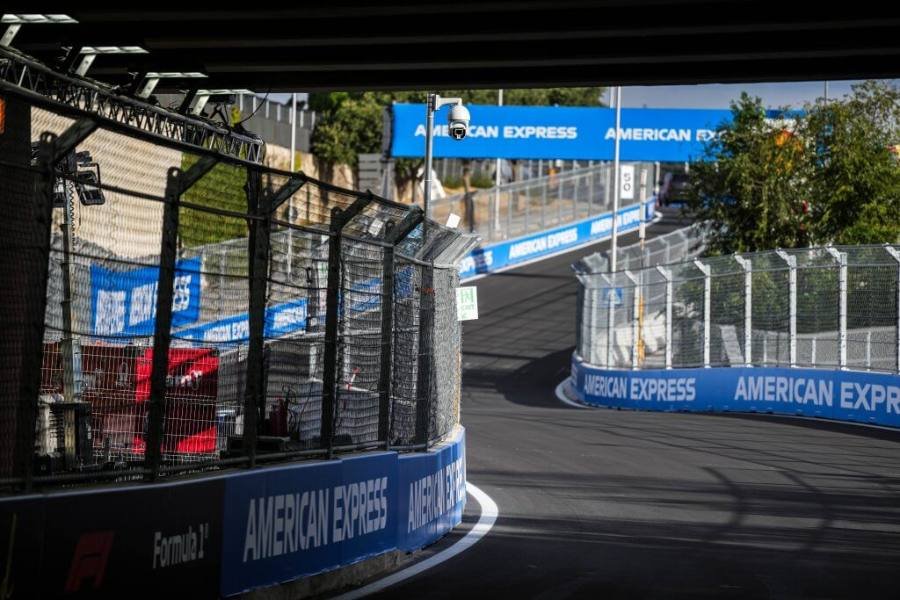
The Formula 2 qualifying session in Madrid could turn into one of the most chaotic sessions of the season. A new track, almost no real data, tight sections, limited visibility, and 22 drivers all searching for the limit at the same time – the recipe for red flags is already written.
The question isn’t whether the session will be interrupted, but how many times.
Our forecast is for between one and three red flags, with three looking like the most realistic scenario. That could turn qualifying from a fight for the fastest lap into a race just to set any valid time at all.
Nineteen Warnings From the Formula 3 Test
During the pre-season test with Formula 3 cars at Madring, 19 stoppages were recorded over two days. The test can’t be compared directly to a 30-minute qualifying session, but the number shows how easily one driver’s mistake can bring the entire field to a halt.
Carlos Sainz also warned that, based on what he saw in testing, he expects yellow flags, safety cars, and red flags throughout the race weekend. The Spaniard describes the track as difficult for overtaking and extremely important for qualifying.
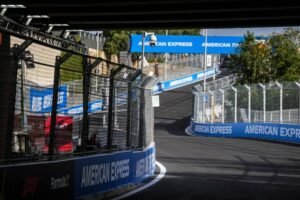
Madring is 5.416 kilometres long and combines tight street sections with faster, more open ones. The most striking feature is the 270-degree Turn 12, “La Monumental” – a 550-metre banked section with up to 24% banking and limited visibility at the exit.
Between the walls, though, there’s no such thing as a small mistake and a big one. There are only two options – you continue, or you end the session for everyone.
One Red Flag Could Ruin Both Races
Formula 2 qualifying sets the starting grid for Sunday’s feature race, while the top ten positions are reversed for Saturday’s sprint.
So an interrupted lap doesn’t just cost a few places. It can wreck the entire weekend.
If a driver is left without a valid time, or outside the required qualifying minimum, their participation depends on the stewards’ permission. They can take into account free practice results, the pace shown, and the specific circumstances that led to the lack of a time.
But if several drivers end up in that position, their order at the back of the grid is no longer entirely predictable. Then comes the wait for the FIA’s decisions – who will be allowed to start, in what order the drivers will be placed, and how that will affect the Saturday and Sunday grids.
A similar situation happened at Silverstone in 2025. Ritomo Miyata was left without a time due to a technical issue, while Amaury Cordeel’s fastest lap was deleted after he caused a red flag. Both were given permission to take part, but were sent to the back of the grid.
That’s exactly the trap in Madrid. None of the title contenders wants their entire weekend’s fate decided afterwards in the stewards’ room.
Traffic Could Be a Bigger Problem Than the Walls
A lap on a new and long track will require serious tyre preparation. Drivers will slow down, look for space, and try to open a gap ahead of them. But other cars on a flying lap will be coming up behind them.
That means traffic, possible blocking, and yellow flags even without any serious incidents.
After every stoppage, the problem gets even bigger. All the cars will go out at almost the same time, time will run short, and the desire to prepare the perfect lap will collide with the need to actually start it in the first place.
The queue at the pit exit will also be part of the strategy. Going out first means a clean track, but less rubber laid down on the tarmac. Waiting for conditions to improve means a potentially faster track, but also a greater risk that the session gets stopped before your attempt.
The Early Fast Lap Could Prove Decisive
Qualifying at Madring puts the teams in front of an interesting choice – whether to wait for the track surface to improve, or to look for a fast lap on the very first run. The new asphalt should get progressively faster as rubber builds up, but every delay increases the risk that the attempt gets interrupted by a yellow or red flag.
Monza showed that a second run doesn’t automatically guarantee improvement. Some drivers failed to beat their times on their final attempts, and for some the first recorded fast lap ended up defining their position. That’s an important warning ahead of Madrid – waiting for theoretically better conditions might bring nothing, especially with traffic, a mistake, or a stopped session.
A strong lap on the very first run would also offer an extra strategic option. If the time is good enough, a driver might not need a fresh set of tyres for the final attack and can save it for the races. On a track with no historical data and a high probability of safety cars, having a fresher set of tyres could prove more valuable than the risk of losing one or two places in qualifying.
That doesn’t just mean setting some time. The difference is significant – what’s needed is an early fast lap that both protects the driver from the chaos and leaves the team the choice of whether it’s even worth sending them back out on track.
In Madrid, the strongest strategy might not be to wait until the last second, but to get the main job done before the red flags start.
The Fastest Driver Might Not End Up on Pole
The new track surface will keep improving with every lap, and the final minutes should offer the best conditions. That makes waiting logical – until someone hits the wall.
That’s why we expect a two-stage qualifying session. Drivers will first try to secure a place in the standings, and then the survivors will attack for pole.
If the red flag comes at just the right moment, an earlier and slower lap could prove more valuable than a potentially fastest lap that never gets completed.
In Madrid, courage will be mandatory. But the most valuable lap in qualifying might not be the fastest one.
It might simply be the one that was set in time.
—
Article prepared by Lyubomir Asenov and Tanya Peneva.