
Verstappen raises concerns over Austin bumps and their physical toll on drivers
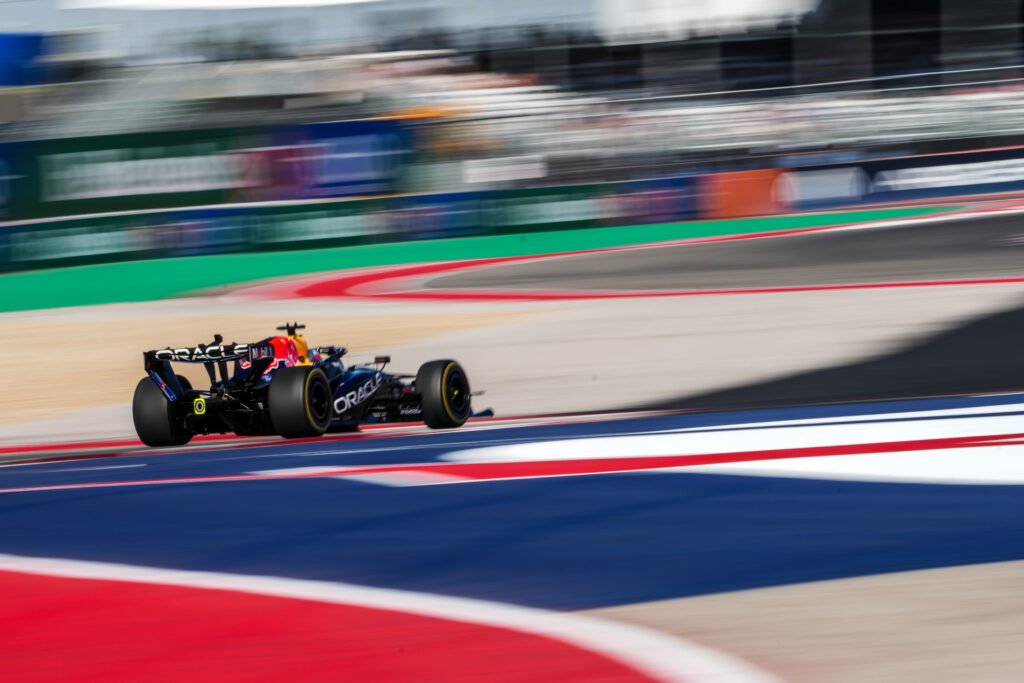 Max Verstappen #3 – Red Bull Racing – Netherlands Free practice sessions at the Formula 1 United States Grand Prix at the Circuit of The Americas in Austin, Texas, USA, on October 23, 2026. © 2026 Lubomir Asenov / LAP.bg. All rights reserved.
Max Verstappen has made the condition of Austin’s track surface a major talking point around the United States Grand Prix. The Red Bull driver criticised the bumps at the Circuit of The Americas and warned against treating their physical impact as an unavoidable part of the weekend.
Verstappen stressed that he enjoys the circuit, its layout and the city. His criticism centres on the impacts drivers experience inside the cockpit. In his view, localised smoothing of the asphalt masks a deeper problem rather than providing a lasting solution. He believes meaningful work on the foundations is needed, despite the time and expense involved.
The four-time World Champion also linked the issue to his own concerns about the strain on his spine. He described checks he had undergone and the heavy vertical impacts he had experienced. These are the driver’s accounts of his own condition, rather than a publicly available medical assessment.
Lando Norris supported the concerns about the physical effects of rough circuits. The McLaren driver explained that bumps can cause headaches and repeated contact between a driver’s head and the cockpit headrest. The discussion therefore extends beyond complaints about finding a comfortable set-up to the conditions in which drivers compete.
From a sporting perspective, the uneven surface also complicates the search for balance. Teams need to combine performance through fast corners with stability under braking and confidence in slower sections.
Verstappen’s comments leave the organisers and Formula 1 facing a clear question: how can they preserve the character of one of the calendar’s most popular circuits while improving its surface? The criticism identifies the problem, but does not amount to an announced programme of comprehensive reconstruction.