Russell Starts From the Back in Singapore After His Fourth Engine Failure
Toto Wolff confirmed the penalty that sends the Briton to the back of the grid — right as his title hopes were already down to a thread.
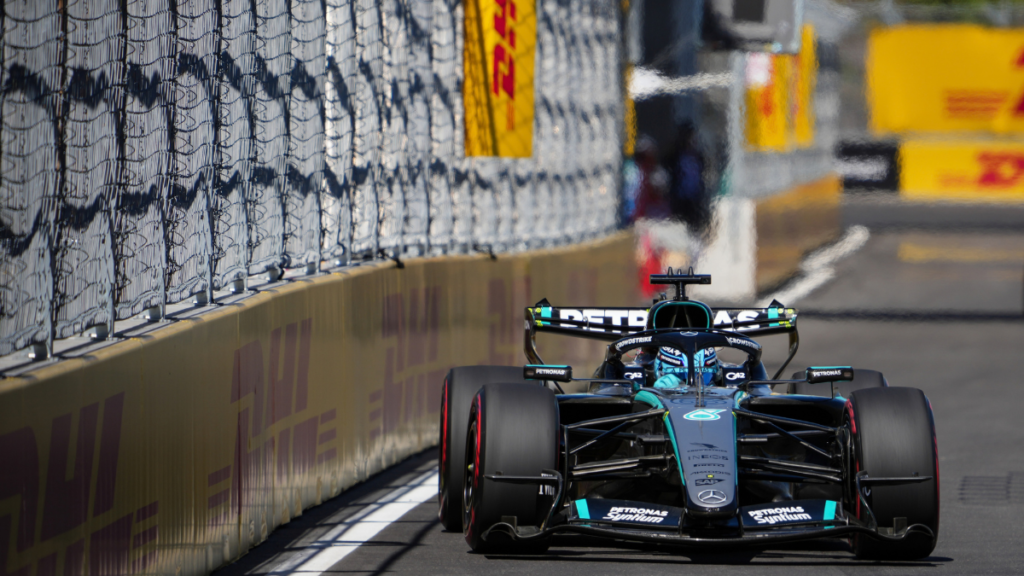
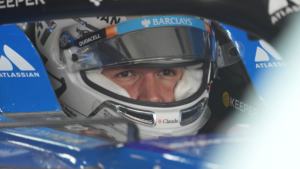
Four power units in one season isn’t a statistic you shrug off. That’s exactly how many George Russell has burned through, after the fourth one gave up for good on lap 50 in Sepang — with the bill arriving at the worst possible venue: the start of the Singapore Grand Prix, where overtaking is close to a theoretical exercise.
Wolff confirms the inevitable
Toto Wolff left no room for doubt. “George has the added challenge of a power unit penalty, which will mean starting from the back of the grid on Sunday, following the engine failure in Malaysia,” the Mercedes boss said. “That is particularly frustrating given the way he drove last weekend and the result he deserved to be fighting for.”
“Unfortunately, these things are part of the sport and our focus now is on giving him the best possible car and opportunities to fight back through the field.”
Behind the diplomatic phrasing sits a considerably colder arithmetic: Russell trails teammate Kimi Antonelli by 84 points in the standings — a gap that makes the word “deserved” feel more honest than the word “will.” The title stopped being a question of “if” a while ago; it’s now a question of how long the team keeps pretending otherwise.
Singapore doesn’t forgive mistakes
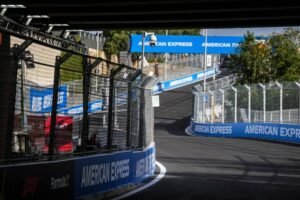
The Marina Bay street circuit is narrow, littered with slow corners, low on grip and coated in dust — a combination that turns overtaking into a luxury rather than a tactic. Add the heat and humidity of yet another high-temperature circuit, and the picture facing Russell is clear: a night for survival, not attack.
Wolff prefers to look forward rather than back: “We need to maximise this final Sprint weekend of the year, keep learning, and score the strongest result we can with both cars. Singapore will be an important test of our understanding and our resilience as a team.” It reads well on paper — but for a team whose engines have now failed to go the distance four times this year, resilience is hard to measure in words alone.